The Australian government has recently revised its retirement rules for employees and staff, triggering widespread discussion across workplaces nationwide. These changes focus on adjusting the retirement age framework while aligning workforce participation with longer life expectancy and evolving economic needs. For employees in Australia, the update brings new clarity on when retirement can occur, how long individuals can stay employed, and what this means for superannuation planning. As these rules begin to shape long-term career decisions, understanding the new age limit and its broader implications has become essential for both public and private sector workers.
Australian retirement rules update for employees and staff
The updated retirement rules in Australia aim to provide more flexibility rather than enforce a strict exit age. While compulsory retirement has been limited for many roles, the government now encourages continued participation based on capability and choice. This shift reflects longer working lives, acknowledges age discrimination limits, and supports workforce flexibility goals. Employers are expected to focus on performance instead of age, while employees gain more control over when they step back. The update also supports economic productivity focus, ensuring experienced staff can contribute longer if they wish. Overall, the change signals a modern approach to ageing and employment.

New retirement age limit in Australia: what has changed
Under the revised approach, Australia no longer promotes a fixed retirement age for most employees, except in specific roles governed by safety or statutory rules. Instead, access to Age Pension remains linked to age thresholds, while employment decisions rely on mutual agreement. This creates retirement age flexibility, reduces forced workforce exits, and supports individual choice rights. Employees can now align retirement timing with health, finances, and personal goals. For employers, it encourages skills retention strategy, especially in sectors facing labour shortages.
 Centrelink Welfare Boost Takes Effect as JobSeeker and Age Pension Payments Rise Across Australia
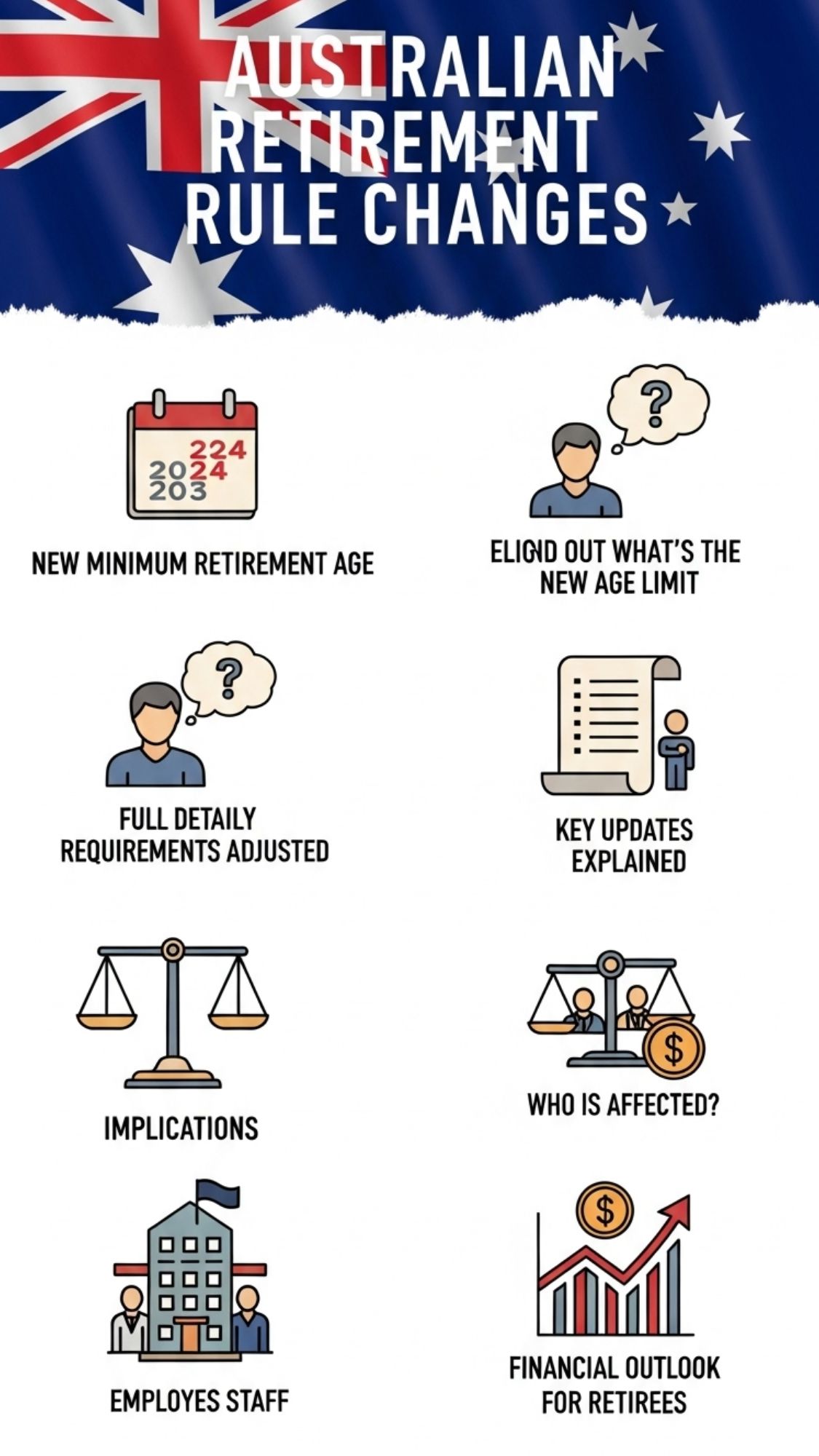
Implications of Australia’s retirement rule changes for workers
The implications of these changes are far-reaching for Australian workers. Employees may choose to work longer to strengthen savings, delay pension reliance, or remain socially engaged. This supports higher super balances, promotes financial security planning, and allows phased retirement options. However, it also requires workers to stay updated on workplace rights and health considerations. For younger employees, the policy balances opportunity by encouraging mentorship and knowledge transfer, creating multi-generation workplaces that benefit productivity and stability.
Overall analysis of Australia’s new retirement framework
Australia’s retirement rule changes reflect a broader global shift toward flexible ageing policies. Rather than defining retirement by a number, the system now values ability, choice, and sustainability. This approach strengthens employee autonomy benefits, supports national labour needs, and aligns with modern ageing realities. While not mandatory to work longer, the option empowers individuals to decide their own path. Over time, this may reshape career planning, pension usage, and workplace culture across Australia.
| Aspect | Previous Approach | New Approach |
|---|---|---|
| Retirement Age | Commonly expected at 65 | No fixed mandatory age |
| Employee Choice | Limited in some sectors | Greater flexibility |
| Employer Criteria | Age-based assumptions | Performance-based |
| Pension Access | Age-linked | Still age-linked |
| Workforce Impact | Earlier exits | Longer participation |
Frequently Asked Questions (FAQs)
1. What is the new retirement age limit in Australia?
Australia now follows a flexible approach with no fixed mandatory retirement age for most employees.

2. Does this affect Age Pension eligibility?
No, Age Pension eligibility is still based on the legislated pension age.
3. Can employers force employees to retire?
In most cases, employers cannot force retirement solely based on age.
4. Who benefits most from these retirement rule changes?
Employees who want to work longer and improve financial security benefit the most.