Australia is preparing for a major shift in road safety enforcement with new driving laws expected to roll out from January 2026. These rules focus on everyday habits many drivers barely think about, such as eating a snack, sipping a drink, or lighting a cigarette behind the wheel. Authorities say these actions can distract drivers more than they realise, increasing crash risks on busy roads. With stricter penalties, clearer definitions of distraction, and expanded police powers, motorists across Australia are being urged to rethink what is considered “normal” behaviour while driving.
Australia new driving laws January 2026 explained
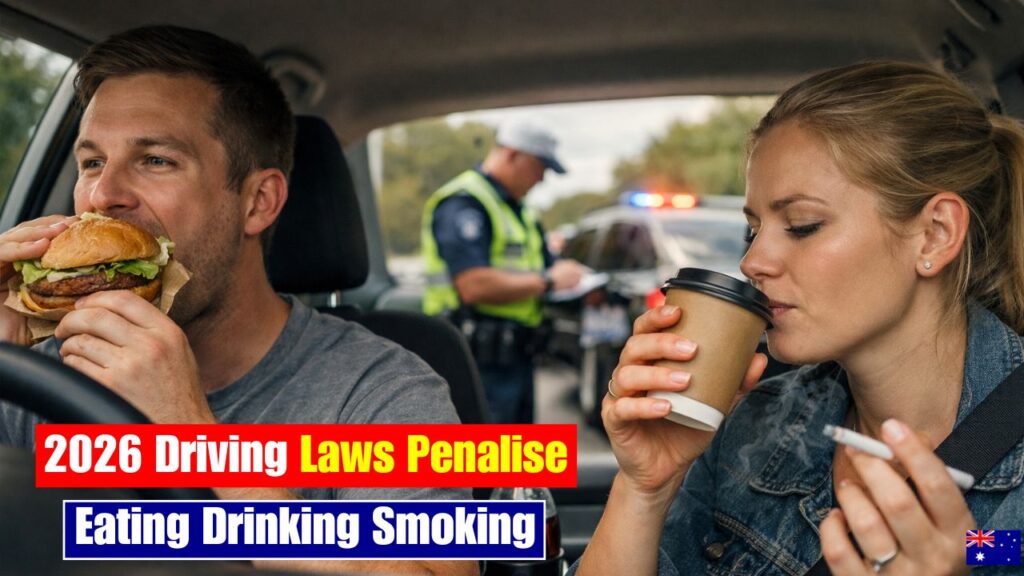
The Australia new driving laws January 2026 aim to tackle distraction beyond mobile phone use. Under the updated rules, drivers may face penalties if eating, drinking, or smoking affects their control of the vehicle. Actions like reaching for food, opening packaging, or taking hands off the wheel could be treated as driver distraction offence. Authorities will rely on police observation powers and dashcam evidence to assess behaviour. Officials stress the focus is on safe vehicle control, not banning food outright. If an action compromises attention, it may trigger on-road penalties similar to careless driving.

Eating, drinking or smoking while driving penalties
Penalties linked to eating, drinking, or smoking while driving may surprise many Australians. Fines are expected to vary by state, but repeat offences could lead to demerit points or licence reviews. Police will consider whether the driver showed reduced road awareness or delayed reactions. Simple acts, like spilling a drink and reacting suddenly, may fall under careless driving rules. Officials say the goal is crash risk reduction, especially in urban traffic. For serious cases, drivers could face licence suspension risk if distraction contributes to dangerous situations.

How Australia plans to enforce distraction rules
Enforcement of the new distraction rules will rely on a mix of traditional policing and technology. Highway patrols will monitor behaviour more closely, supported by expanded enforcement focus on non-phone distractions. In some areas, camera footage and public reports may support investigations. Authorities emphasise driver responsibility standards, reminding motorists that hands-free does not mean risk-free. Education campaigns will explain legal behaviour boundaries so drivers understand what crosses the line. The message is clear: maintaining full driving attention is now a legal expectation.
What these driving law changes mean for motorists
For everyday drivers, these changes mean reassessing habits long considered harmless. Eating on long commutes or smoking in traffic may now carry consequences if they interfere with driving. The laws are designed to reinforce road safety priorities rather than punish casual behaviour. By setting clearer standards, authorities hope to encourage smarter driving choices and fewer distraction-related crashes. Motorists are advised to plan breaks, avoid multitasking, and focus on defensive driving habits. Ultimately, the reforms aim to support safer shared roads for everyone.
| Activity | Potential Issue | Possible Penalty |
|---|---|---|
| Eating food | Hands off wheel | Fine or warning |
| Drinking beverages | Spills and distraction | Demerit points |
| Smoking | Reduced attention | Careless driving charge |
| Repeated offences | Ongoing risk behaviour | Licence review |

Frequently Asked Questions (FAQs)
1. Are eating and drinking completely banned while driving in Australia?
No, penalties apply only if the behaviour distracts you or affects vehicle control.

2. When do the new driving laws take effect?
The updated rules are expected to begin from January 2026.
3. Can smoking alone lead to a fine?
Smoking may lead to penalties if it clearly distracts you while driving.
4. Will these rules apply nationwide?
All states will align broadly, but specific penalties may vary by state.