Australia’s Seniors Concession Card is a crucial support tool for older residents, helping reduce everyday living costs through discounts and concessions. In 2026, however, a series of new rule changes has caught many pensioners off guard. From tighter eligibility checks to revised income assessments, the updates are already sparking concern across the country. Many seniors worry about losing access to benefits they’ve relied on for years. Understanding what has changed, why it matters, and how it affects you is now essential for staying financially secure.

Australia Seniors Concession Card 2026 eligibility rules explained
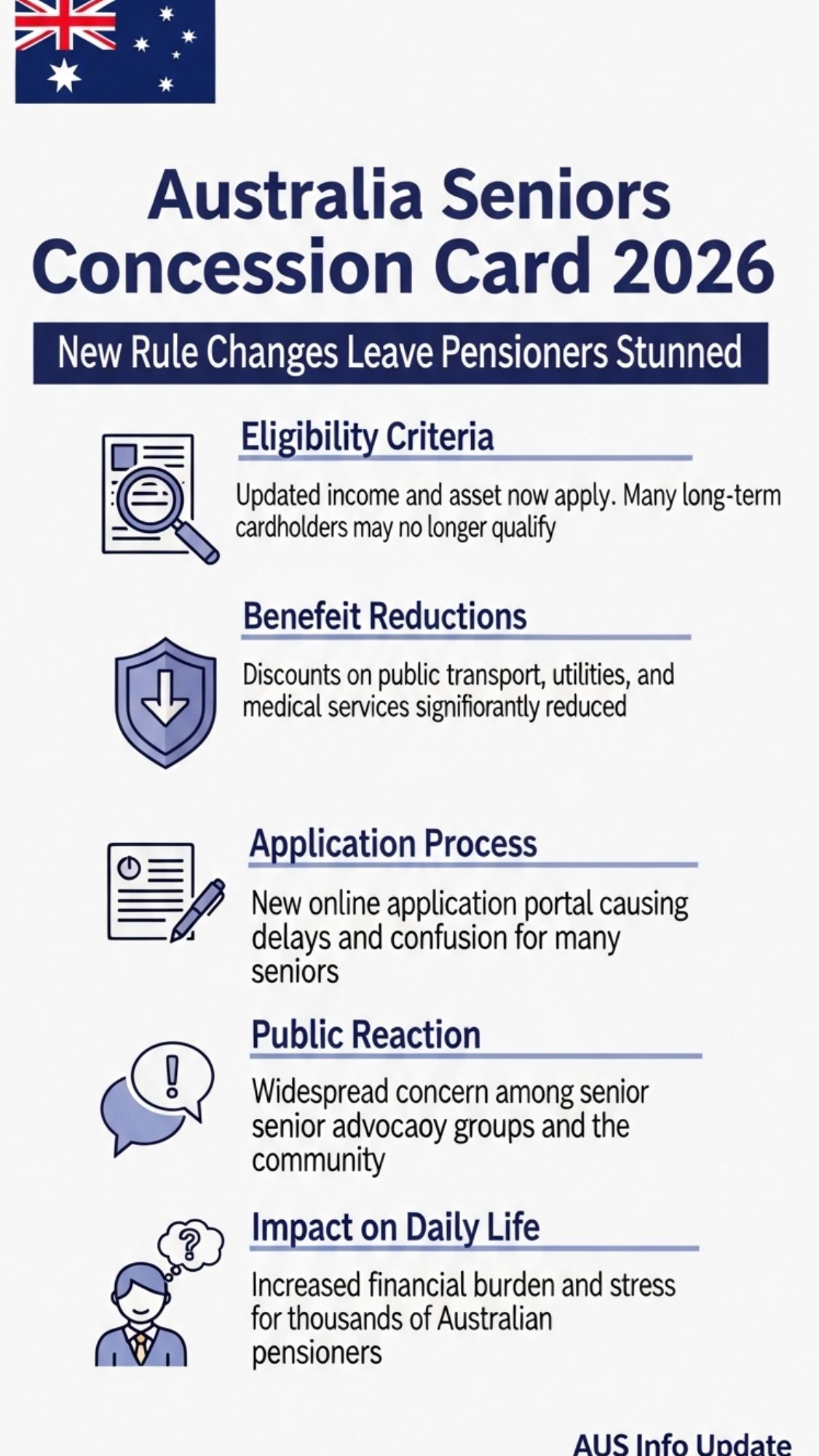
The biggest shock for many cardholders lies in the updated eligibility criteria. Authorities have refined income and residency checks, meaning some pensioners may no longer automatically qualify. Even small changes in earnings or living arrangements can now trigger a review. Seniors are being urged to monitor income assessment limits, keep records ready for regular eligibility reviews, and report changes promptly to avoid suspension. The focus is on ensuring support reaches those most in need, but critics argue the stricter verification process adds stress. For long-term holders, the shift away from automatic renewals feels like a major adjustment.

Key benefit changes under the Seniors Concession Card 2026 update
Beyond eligibility, several benefits linked to the card have been reshaped. While core concessions remain, some discounts now vary by state and provider. Transport and utility savings may be capped, and certain local perks have been reduced. Pensioners are advised to check updated concession rates regularly, as assumptions based on past years may no longer apply. The government says the move improves fairness, but seniors fear reduced everyday savings at a time of rising costs. Understanding state-based variations and planning around essential service discounts has become more important than ever.

Why the Seniors Concession Card 2026 changes shocked pensioners
The reaction from pensioners has been swift because many feel unprepared. Communication gaps and complex wording have left people uncertain about their status. For those on fixed incomes, the risk of losing concessions creates anxiety around budgeting. Advocacy groups highlight financial planning pressure and warn that confusion could lead to missed entitlements. Seniors are encouraged to seek advice early, verify their cardholder obligations, and stay alert to official notification letters. The emotional impact is clear, as the card has long symbolised retirement cost relief.
What these changes mean for seniors going forward
Looking ahead, the 2026 updates signal a more active role for seniors in managing their concessions. Staying informed and proactive will be key to retaining benefits. While the intent is sustainability, the transition period may be challenging. Clear guidance, community support, and regular checks can help ease the shift. Pensioners who adapt early are more likely to protect long-term concession access and avoid disruptions. Ultimately, the changes redefine how support is delivered, placing greater emphasis on personal compliance awareness and realistic budgeting in an evolving system.
| Category | Before 2026 | From 2026 |
|---|---|---|
| Eligibility checks | Limited reviews | Regular reassessments |
| Income limits | Broader thresholds | Tighter thresholds |
| Benefit scope | Mostly uniform | State-based variations |
| Renewal process | Often automatic | Manual confirmation |
Frequently Asked Questions (FAQs)
1. Who qualifies for the Seniors Concession Card in 2026?
Eligibility depends on updated income limits, residency status, and regular reviews.

2. Are existing cardholders affected by the new rules?
Yes, current holders may be reassessed under the revised criteria.
3. Have benefits been removed entirely?
No, benefits remain but some discounts have changed or become state-specific.
4. What should seniors do to avoid losing concessions?
Keep details updated, respond to reviews promptly, and check official notices.