Australian government employees and long-serving public sector workers are welcoming a significant policy shift that reshapes long-term retirement planning. Authorities have increased the official retirement age for eligible government staff, a move designed to strengthen pension outcomes and allow individuals to extend their earning years. In Australia, where longevity is rising and retirement savings are under pressure, this decision is being positioned as a long-term benefit rather than a delay. The updated age threshold aims to help workers build stronger superannuation balances while maintaining workforce stability across essential public services.
Australian retirement age increase reshapes government staff futures
The revised retirement age for Australian government employees reflects changing economic and demographic realities. By allowing staff to work longer, the policy supports extended earning years, improved super growth window, and a more stable workforce base. Many departments have struggled with skills shortages, and retaining experienced workers helps ease that pressure. For employees, the change offers a chance to delay retirement without penalty, potentially increasing final pension outcomes. While some workers may still choose early retirement, the new structure provides flexibility, especially for those who feel capable and motivated to continue contributing in their roles.

Higher retirement age helps boost lifetime earnings potential
One of the biggest advantages of the new retirement age policy is its impact on income over time. Staying employed longer can lead to higher total wages, stronger final pension calculations, and improved retirement income security. Additional years of service often translate into larger superannuation contributions, compounding benefits well into retirement. For many public servants, especially those who started later in their careers, this extension offers a practical way to close savings gaps. Financial planners note that even one or two extra working years can significantly influence long-term financial comfort.
 Centrelink Welfare Boost Takes Effect as JobSeeker and Age Pension Payments Rise Across Australia
What the retirement age change means for current employees
For existing government staff, the updated retirement age does not force anyone to stay longer but opens new options. Workers can reassess plans based on personal health factors, evolving career flexibility options, and overall financial readiness goals. Departments are expected to introduce transitional arrangements, such as part-time roles or phased retirement pathways. This approach helps employees adjust gradually rather than facing abrupt career endings. The policy also encourages conversations around skills transfer, ensuring younger workers benefit from the experience of senior colleagues.
Policy impact and long-term outlook
From a broader perspective, Australia’s decision to lift the retirement age for government staff aligns with global trends addressing ageing populations. The move supports long-term pension sustainability, reduces future fiscal pressure, and promotes active ageing participation in the workforce. While not without debate, the policy balances individual choice with national economic needs. Over time, its success will depend on flexible implementation and strong workplace support, ensuring older employees feel valued rather than obligated to remain in service.
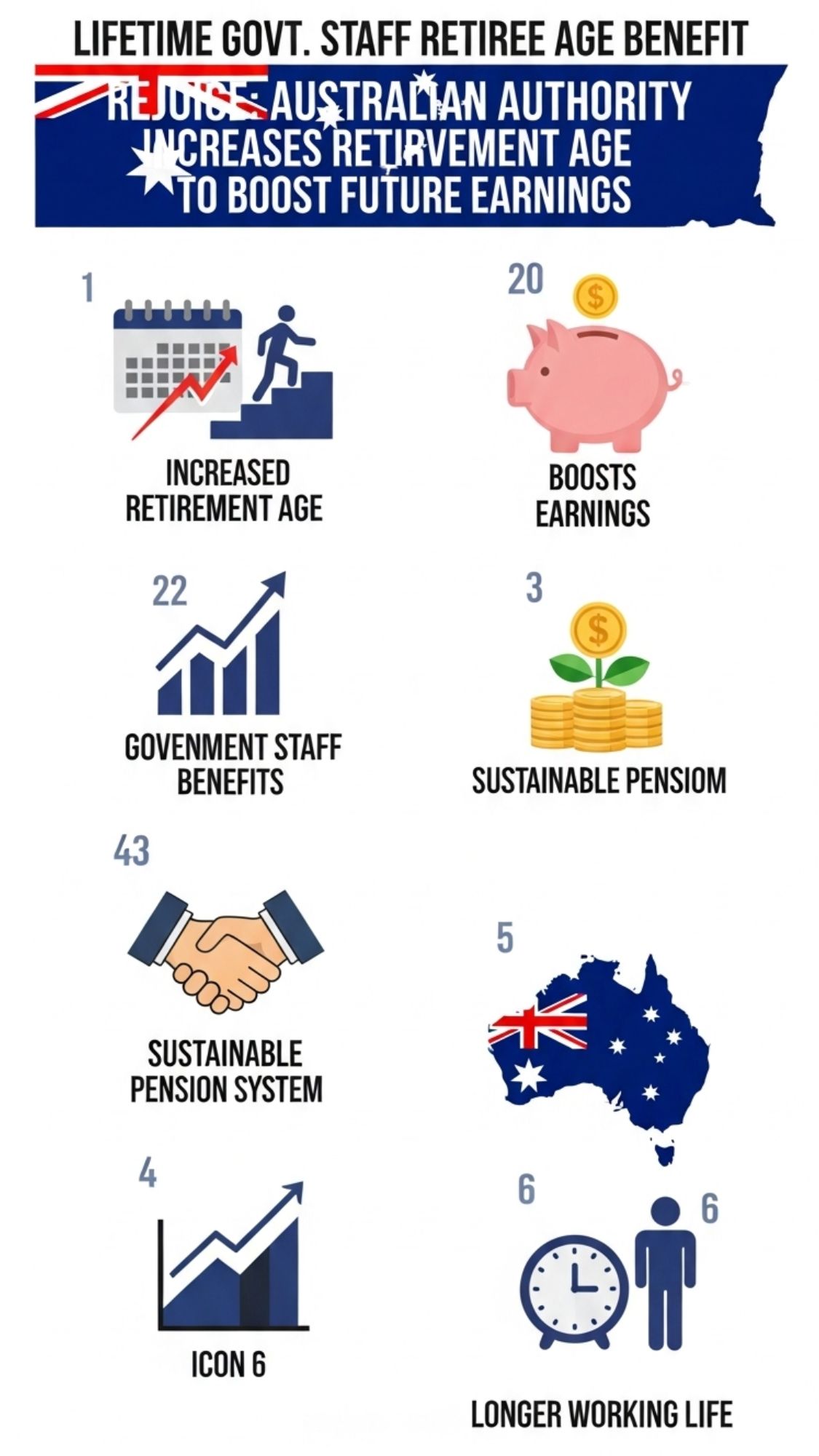
| Aspect | Before Change | After Change |
|---|---|---|
| Standard Retirement Age | 65 years | 67 years |
| Superannuation Growth | Limited period | Extended period |
| Workforce Retention | Early exits | Longer retention |
| Employee Flexibility | Restricted options | Phased retirement |
Frequently Asked Questions (FAQs)
1. Who is affected by the retirement age increase?
It mainly applies to eligible Australian government and public sector employees.

2. Is retirement now compulsory at the new age?
No, employees can still choose to retire earlier if they wish.
3. Will this change increase pension payments?
Working longer can improve superannuation and final pension outcomes.
4. Does the policy apply to private sector workers?
No, it is specific to government and public service employment structures.